MARKETING CONVERGENCE SOLUTIONS

Ruth Welting
A Look at a Rare and Amazing Memphian, Reaching the Pinnacles of Success in the World
of International Opera

Ruth Lynn Welting (1948–1999) was born and grew up in Memphis, Tenn., and went on to astound audiences as one of the top coloratura sopranos of her time. Known for her stunning vocal range, incredible technical skill, and captivating stage presence, she performed to high acclaim many difficult coloratura roles in some of the most prestigious opera houses in North America and around the world.
I had the privilege of first meeting "Ruthie" in 1966
when we were both students singing in operas
and choral groups at the University of Memphis.
She was attending UofM on a full scholarship
to study piano. We also sang in the choir
and studied voice at The Second Presbyterian
Church Music Department. I remember Ruth
as very happy, musically talented, and warm
with an incredible laugh and extremely high
intellect. In addition to her beautiful singing voice,
Ruth had high proficiency with a number
of musical instruments including piano, flute,
and guitar.
In 1968, Ruth won the Mid-South Regional Metropolitan Opera (Met) auditions held in Memphis, earning her place at the Met National Finals in New York that November. There, she performed the extraordinarily demanding aria "Les oiseaux dans la charmille" (Olympia’s aria) from Offenbach’s Les Contes d’Hoffmann. Competing against future opera luminaries such as Jessye Norman, Nancy Shade, and Gwendolyn Jones, she advanced to finalist status, an impressive achievement that signaled the arrival of a remarkable new talent. In the years that followed, she would reprise the role of Olympia to widespread praise in major opera houses around the world. Along with two other finalists, she was invited to join the Metropolitan Opera Studio the following season, an early and powerful affirmation of her exceptional promise.
By 1971, Ruth had begun the first of several years of intensive vocal study in Rome with the renowned teacher Luigi Ricci, refining the technique that would define her career. Even while based in Italy, she returned periodically to the United States to perform and audition, steadily building her professional momentum.
In February 1971, I received a letter from Ruth sharing the exciting news that she had secured her first contract with the New York State Theater (New York City Opera) to perform that April as Blondchen in Mozart’s Abduction from the Seraglio. The agreement also included ten performances the following year as Oscar in Verdi’s The Masked Ball, Rosina in Rossini’s The Barber of Seville, and Queen of Shemakha in Rimsky-Korsakov’s Le Coq d’Or. With characteristic humility and joy, she wrote, "I feel so lucky to get leading roles! I get $150 a performance and extra for covering and rehearsals. This isn't much but they don't pay anybody (much) including Sills (Beverly). It seems like my career is launched the way I want..."
In 1999, I was deeply saddened to hear of her passing at the early age of 51. Those who had the privilege of knowing Ruth during her formative years in Memphis and later during her illustrious career, all know what a very special and unique human being she was.
I have created this webpage in order to continue her memory and expose her extraordinary accomplishments to more of those who knew and loved her, especially Memphians.
If you have memories, comments, or images of Ruth you would like to add to this gallery,
please email me, RE (Bob) Casper, Vero Beach, Florida
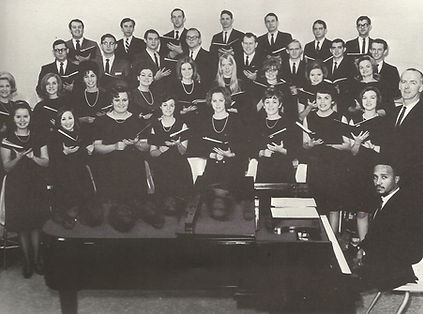
Ruth Welting, far left bottom row, in the 1967 University of Memphis Chorale. Far right are Dr. Walter Wade, chorale director, and Russel Wilson, accompanist.
> Read - "Ruth Welting: A Life in Opera"
Her Career Begins in Memphis
From a modest childhood in Memphis to the most revered opera houses in the world, Ruth Lynn Welting’s life reads like a once-in-a-generation musical ascent. A prodigy whose extraordinary talent was evident almost before she could speak, Welting refined her gift at the University of Memphis before captivating international audiences with her dazzling coloratura soprano voice, technical brilliance, and emotional depth. This article traces her remarkable journey, from early promise and pivotal breakthroughs to global acclaim and a legacy that continues to inspire, It reveals how one soft-spoken Memphian left an indelible mark on the world of opera.
Read the 2025 article by Robert Casper published in the University of Memphis Magazine or download the PDF.
> Read - "Ask Vance: Opera Star Ruth Welting"
March 30, 1968, Commercial Appeal headline
was “Ruth Welting Dazzles Opera Judges.”
Once celebrated on the world’s greatest opera stages and later largely absent from public memory, Ruth Welting remains one of Memphis’s most remarkable, and quietly forgotten, musical talents. In this Ask Vance column, historian Vance Lauderdale traces the extraordinary rise of the petite coloratura soprano from Memphis's Sherwood Forest neighborhood, Messick High School, the University of Memphis, to Julliard, to study in Italy, and on to international acclaim. It explores her meteoric career, personal triumphs and tragedies, and the legacy she left behind when she stepped away from the spotlight far too soon.
Read the Jan. 26, 2026 article in Memphis Magazine by Vance Lauderdale or download the PDF.
> Read - Ruth Welting's Performance Reviews
Here are some of Ruth Welting's performances reviews during her career. However, in Ruth's interview with Bruce Duffie (Read a Transcript of the Oct. 20, 1981 interview), she mentioned that she never reads her reviews. She said, "...the best critic of all is the audience. They're very truthful. They will give you exactly the reception they feel you deserve."
New York Times, by Robert Sherman,
April 26, 1971
Review of the Met’s performance of Mozart's “The Abduction From the Seraglio”
"The saving grace was the debut of Ruth Welting, a 22 year‐old Memphis soprano, whose sister, Patricia, was also a member of the company several seasons ago. As the flighty Blonde, Miss Welting stole the show as soon as she arrived in it, at the start of Act II. Her pixieish appearance, saucy stage manner and nimble voice added a welcome dash of spice to the proceedings, and she continued to pep up every scene in which she appeared"
New York Times, by Raymond Ericson,
Jan. 2, 1978
Review of a concert by the New York Philharmonic led by Andre Kostelanetz at Avery Fisher Hall
"The evening's soloist was Ruth Welting. The diminutive, soprano has already proved her worth in appearances with the New York City Opera and the Met. The bright acoustics of Fisher Hall, gave her voice a glitter that was unexpected and quite spectacular. She is a virtuoso vocalist and, more than that, a singer who tries to get to the heart of the music."
Nicholas Limansky – CS Music Magazine, February 2000
“She had a bright, sweet timbre and a formidable technique. She occasionally astounded listeners by interpolating high Gs and A flats. Her controversial cadenza in Lucia's Mad Scene boasted not only high Fs of great power and ease but also trills on high D and E.”
Catherine Foster – The Christian Science Monitor, March 1, 1984
“On a brighter side, Ruth Welting's utterly delightful rendition of the Olympia scene from The Tales of Hoffmann was full of wonderful things to come. Her interpretation of the little windup doll, complete with painted porcelain face and crystal voice, was as appealing as a Cabbage Patch Kid. She will sing the role here in December.”
Review of the opera recording of
Ariadne auf Naxos (Strauss)
Edo de Waart, conductor – 1976, Opera Depot
"Ruth Welting is a winning Zerbinetta, combining earthy charisma with dazzling coloratura fireworks."
Elizabeth Forbes – The Independent,
from Ruth Welting's Obituary Dec. 23, 1999
"Soprano Ruth Welting dazzled her audiences with the ease of her singing in coloratura roles such as Donizetti's Lucia, Richard Strauss's Zerbinetta and Mozart's Konstanze. She produced ravishing sounds up to the F above high C, and she was also an excellent actress, who made an enchanting figure on stage. At a time when heavier voices had become fashionable in much of this repertory, she projected her light, pure-toned voice in such a way that she filled the largest auditoria, notably the Metropolitan Opera, New York, and Lyric Opera, Chicago, to the satisfaction of the listener furthest from the stage."
Review of the opera recording of Cendrillon (Rossini)
Julius Rudel, conductor – 1978, Sony Classical
“The sadly short-lived coloratura soprano Ruth Welting is a delightful Fairy Godmother, supported by the ever-reliable Ambrosian Opera Chorus as her attendant spirits. Their music is sparklingly festive, making this a perfect Christmas entertainment.”
Review of the opera recording
of Mignon (Thomas)
Antonio de Almeida, conductor – 1977,
Sony Classical
“Welting brings just the right coquettish charm to the part and sings with the light insouciance of a French soprano of an earlier generation. The Polonaise, very difficult in its uncut version, has bright and natural coloratura and excellent trills.”
Elizabeth Forbes, The Independent
from Ruth Welting's Obituary Dec. 23, 1999
"Welting made her Chicago debut in 1976 in another of her most popular roles, Olympia the Doll in Offenbach's Les Contes d'Hoffmann. Her ability to dance as well as sing like a clockwork toy always brought forth torrents of applause."
> Read - "Soprano Ruth Welting,
A Conversation with Bruce Duffie"
"How does a girl from Tennessee get into opera?"
Few opera singers speak as candidly and as thoughtfully about their art as Ruth Welting does in this revealing conversation with broadcaster Bruce Duffie. Known worldwide for her dazzling coloratura technique and crystalline high notes, Welting steps away from the spotlight here to reflect on what truly defined her career: artistic growth over fame, integrity over ambition, faith over applause, and joy over perfection. Warm, witty, and deeply introspective, she discusses everything from vocal discipline and repertoire choices to the personal convictions that grounded her amid opera’s relentless demands, offering a rare and intimate portrait of a great artist in her own words.
Read a Transcript of the Oct. 20, 1981 interview with Bruce Duffie or download the PDF.
> Read - “’Lucia’ to Follow Sister at Met”
"Ruth and her older sister, Patricia (also from Memphis),
were Met performers."
Prior to Ruth Welting making her local debut in Pittsburgh Opera’s “Lucia di Lammermoor” at Heinz Hall on Dec. 11 and 13, 1975, Pittsburg Press writer Carl Apone gives us this profile of the singer as both a dazzling talent and a deeply reflective artist at a pivotal moment in her career. On the eve of major debuts at the Metropolitan Opera, Chicago Lyric, and Covent Garden, Welting is celebrated not only for her crystalline coloratura and international engagements, but also for the disciplined musicianship and emotional intelligence that shape her interpretations, particularly in Lucia di Lammermoor. Set against the rare distinction of two sisters (Ruth's sister Patricia Welting) singing at the Met, the article captures a young soprano balancing humility, ambition, and artistic depth as she steps onto the world’s most prestigious stages.
Download a PDF of the Dec. 7, 1975 article in the Pittsburg Press by Carl Apone
> Listen - Rare Early Recordings of Ruth
Made in Memphis
These two recordings of Ruth were made while she was a student at the University of Memphis in the late 1960's. Both were recorded at The Second Presbyterian Church Music Department.
This is the recording I made of Ruth singing three arias for her Met "audition tape" in 1968. She would go on to become one of that year's Met finalists.
1. "Eccomi in lieta veste... Oh! Quante volte" from Bellini's Romeo and Juliet.
2. "Dearest Mama, the Letter Aria" from Moore's The Ballad of Baby Doe.
3. "O luce di quest anima" from Donizetti's Linda di Chamounix.
At only 20 years of age she was showing her voice's immense range, trills, fluidity, and color that would later place her in great demand to sing coloratura opera roles at the Met, New York City Opera, and many other venues in Europe and throughout North America. The piano accompaniment is by her vocal instructor, Jane Robertson.
This the first time I ever heard Ruth sing during a performance of Handel's Messiah when she was singing in the choir at The Second Presbyterian Church, Memphis, Tennessee in 1966. The organ accompaniment is by her vocal instructor, Jane Robertson.
> More Listening - Ruth Welting's Discography
Ruth Welting left an extensive collection of recordings made with internationally renowned artists, symphonies, and conductors including one of Strauss' opera Der Rosenkavalier, featuring a star-powered cast comprised of, in addition to Ruth, Jose Carreras, Evelyn Lear and Frederica von Stade.

Recordings
Her recordings can also be found on YouTube, Apple Music, and Spotify.
Here are three recordings from different periods in Ruth's career.
1973: Offenbach, "Doll Song" fromTales of Hoffman
1981: Strauss, "Großmächtige Prinzessin" from Ariadne auf Naxos, Lyric Opera of Chicago
1992: Mozart "Concert Aria K.70, Sol nascente in questo giorno," New York City, with Julius Rudel conducting
> Watch & Listen - Performance Recordings
of Ruth on YouTube
> Photos of Ruth Performing at the Metropolitan Opera
in New York City (Met Archives)
Ruth Welting made her Metropolitan Opera debut on March 20, 1976, singing the role of Zerbinetta in Strauss’s Ariadne auf Naxos. She was highly admired for her secure high register, appearing in over 50 performances at the Met until her final performance at the Met as Queen of the Night
on Nov. 20, 1993 in Mozart's The Magic Flute (Die Zauberflöte).
Left to right:
1 & 2; As Zerbinetta in Strauss’ Adriadne auf Naxos
3 & 4; Sophie in a 1977 performance of Strauss’ Der Rosenkavalier
5; As Queen of the Night in a production of Mozart’s Die Zauberflöte
6 & 7; As Olympia in a 1989 performance of Offenbach’s Les Contes d'Hoffmann


> Photos of Ruth Performing at Other Prestigious Opera Houses
Ruth Welting sang over 20 roles professionally in prestigious opera houses across North America and Europe from 1971 to 1993, and was considered a leading interpreter of light, high-soprano repertoire. Roles she was known for included: Zerbinetta (Ariadne auf Naxos), Olympia (Tales of Hoffmann), Queen of the Night (Die Zauberflöte), Lucia (Lucia di Lammermoor), Adele (Die Fledermaus), Rosina (Barber of Seville), Philine (Mignon), Baby (The Ballad of Baby Doe), and La Fée (Cendrillon).
Left to right:
1, 2, & 3; With the San Francisco Opera Company as Norina in Donizetti's Don Pasquale
4: As Lucia and Richard Leech in Donizetti's Lucia di Lammermoor, Canadian Opera Company
5: In a dress rehearsal as Zerlina in Mozart's Don Giovanni, at the San Francisco Opera with. Also, on the far left is David Rendall as Masetto and kneeling is Walter Berry as Leporello. The singer on the far right is unknown
6: In a 1984 production of Offenbach'sThe Tales of Hoffman, with the Opera Company of Boston.


